Net Works - 2026
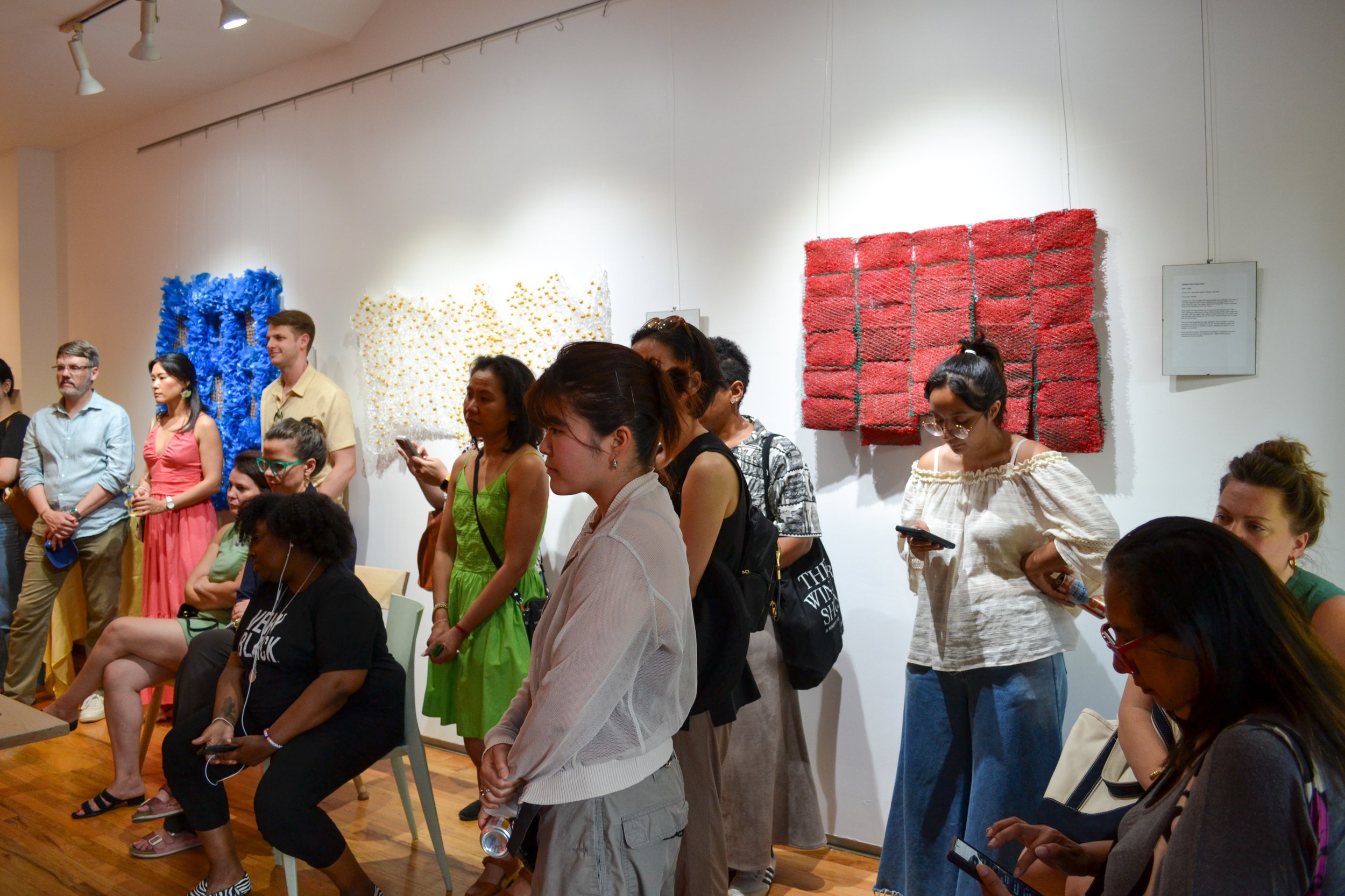
Made from woven plastic, reclaimed nets, and scraps, Net Works: Structures of Mutuality explores frameworks that hold, systems of exchange, and a web of relationships. It transforms environmental waste into a metaphor for human and ecological repair.
Centered on the use of reclaimed plastic nets and hand-crafted fiber, this exhibition reflects the Gleaning Project’s belief that artmaking can be both a material and social practice, rooted in collaboration and care. Net Works offers a vision of interdependence, and this art, like a net, is strongest when its threads are many. Much of what we discard- materials, relationships, and even parts of ourselves- can be reconnected into something whole.
"We are caught in an inescapable network of mutuality, tied in a single garment of destiny."
Dr. Martin Luther King Jr. – Letter from Birmingham Jail
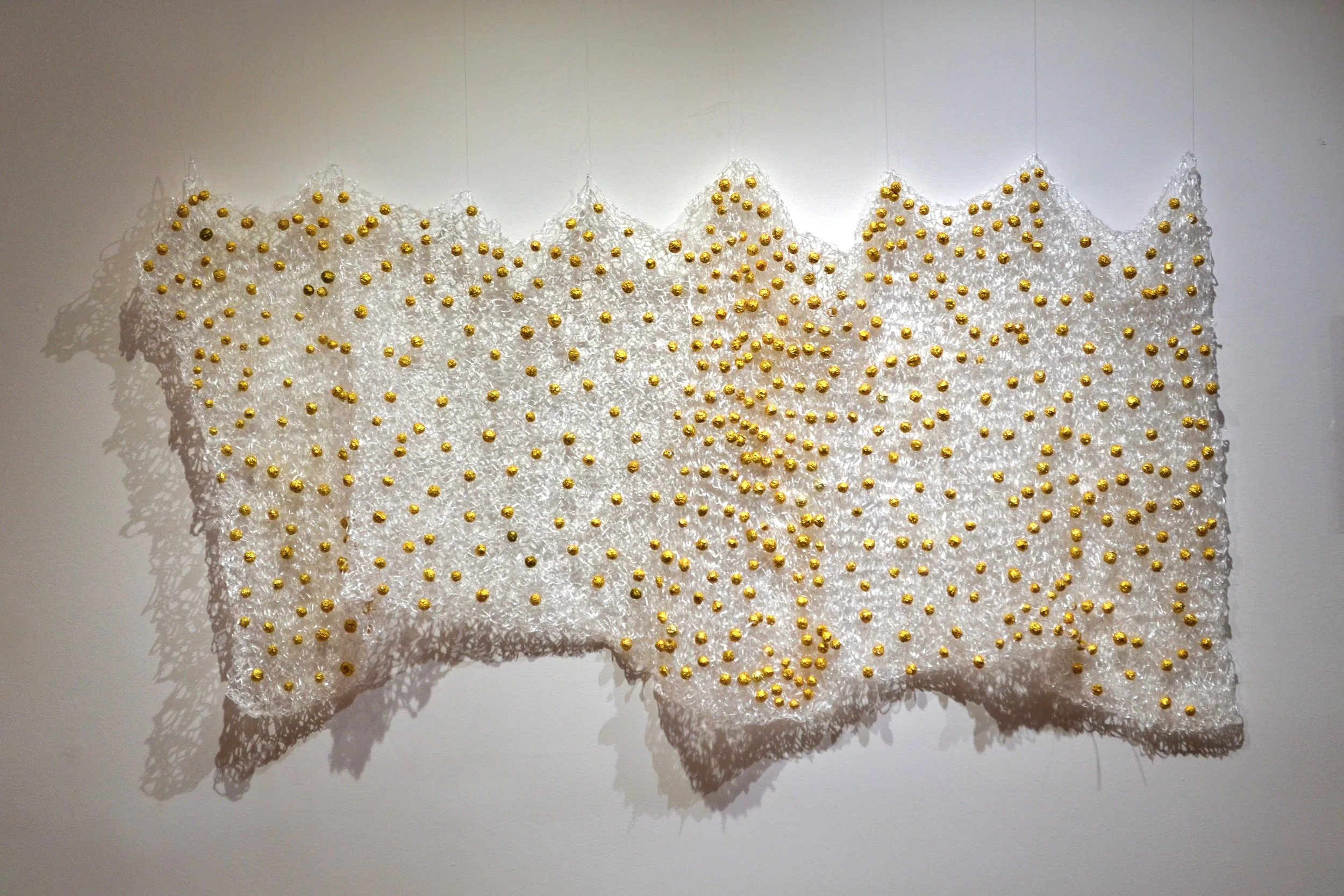
Ballroom
2026
Clear plastic, aluminum foil, nylon strings
65 x 25 in
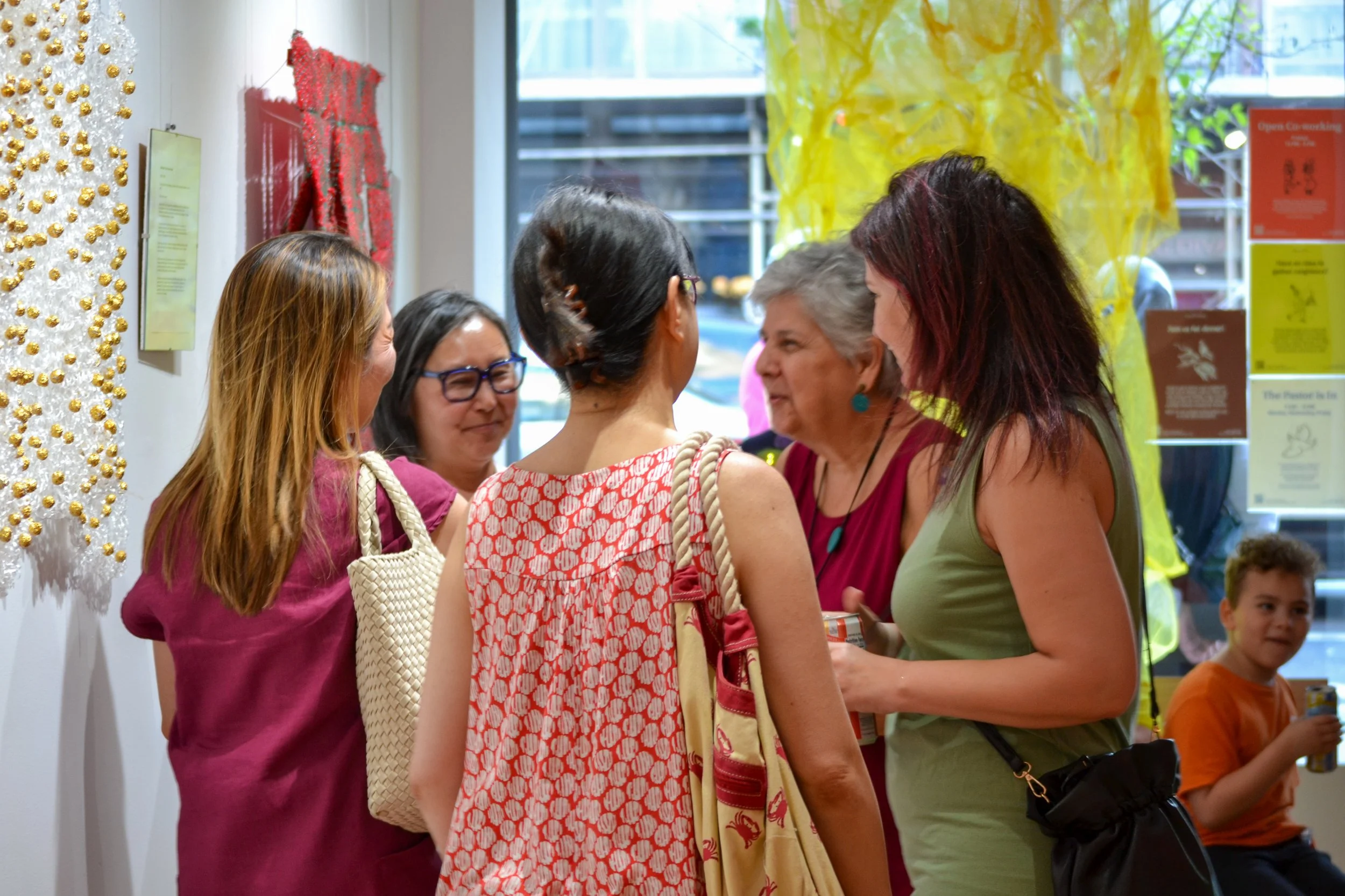
“Ballroom” draws on the word's original meaning as a space for communal gathering, movement, and encounter. Constructed from reclaimed plastic packaging turned into yarn and woven into netting, the piece is embedded with small aluminum-foil spheres from chocolate wrappers, hand-sewn into the surface.
In contrast to the Ballroom, which today is associated with power, excess, and political spectacle, this work shifts the focus toward care and community. It centers the value of showing up for one another, where dignity is not tied to status, and the ballroom is a site of true connections rather than display, with collective effort at the center.
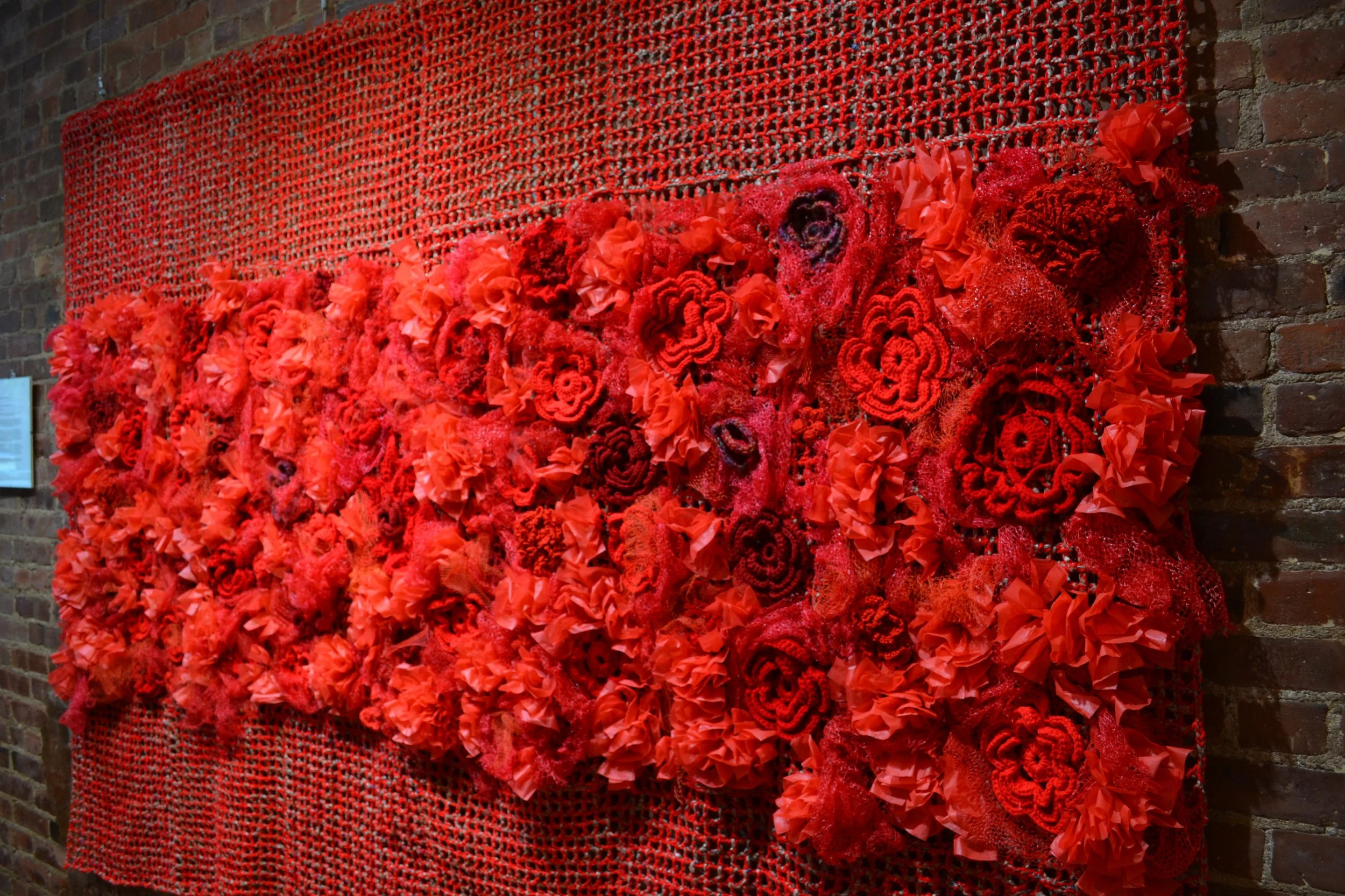
“Hearts starve as well as bodies; give us bread, but give us roses”
Community Garden
2026
Plastic bags, yarn, sewing thread, nylon strings, hot glue
102 x 68 in
This line from a 1911 poem by James Oppenheim became famous during the Bread and Roses strike (a textile labor movement led largely by immigrant women workers in Massachusetts). They were fighting not only for fair wages but for dignity, for a life that held beauty, not just survival.
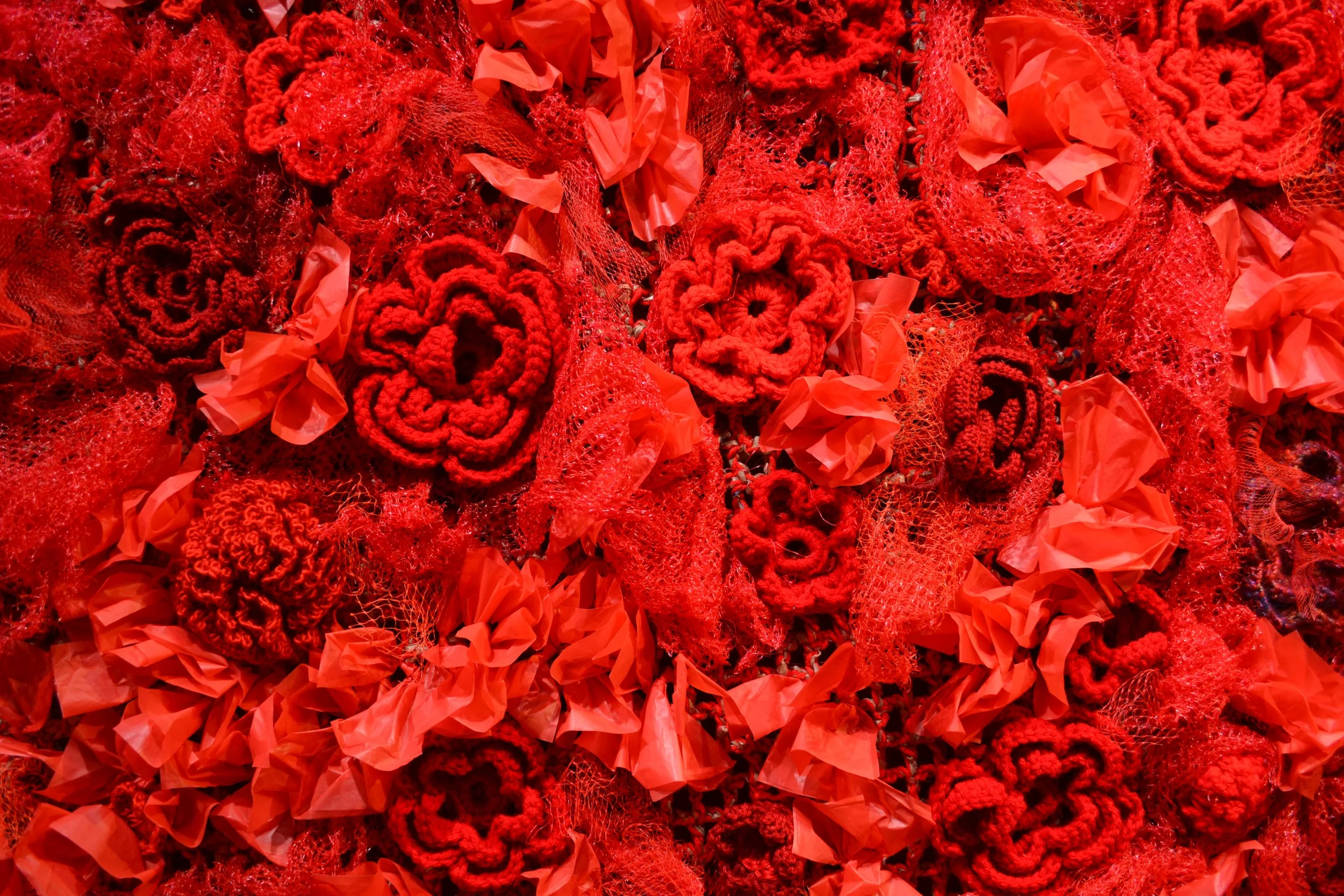
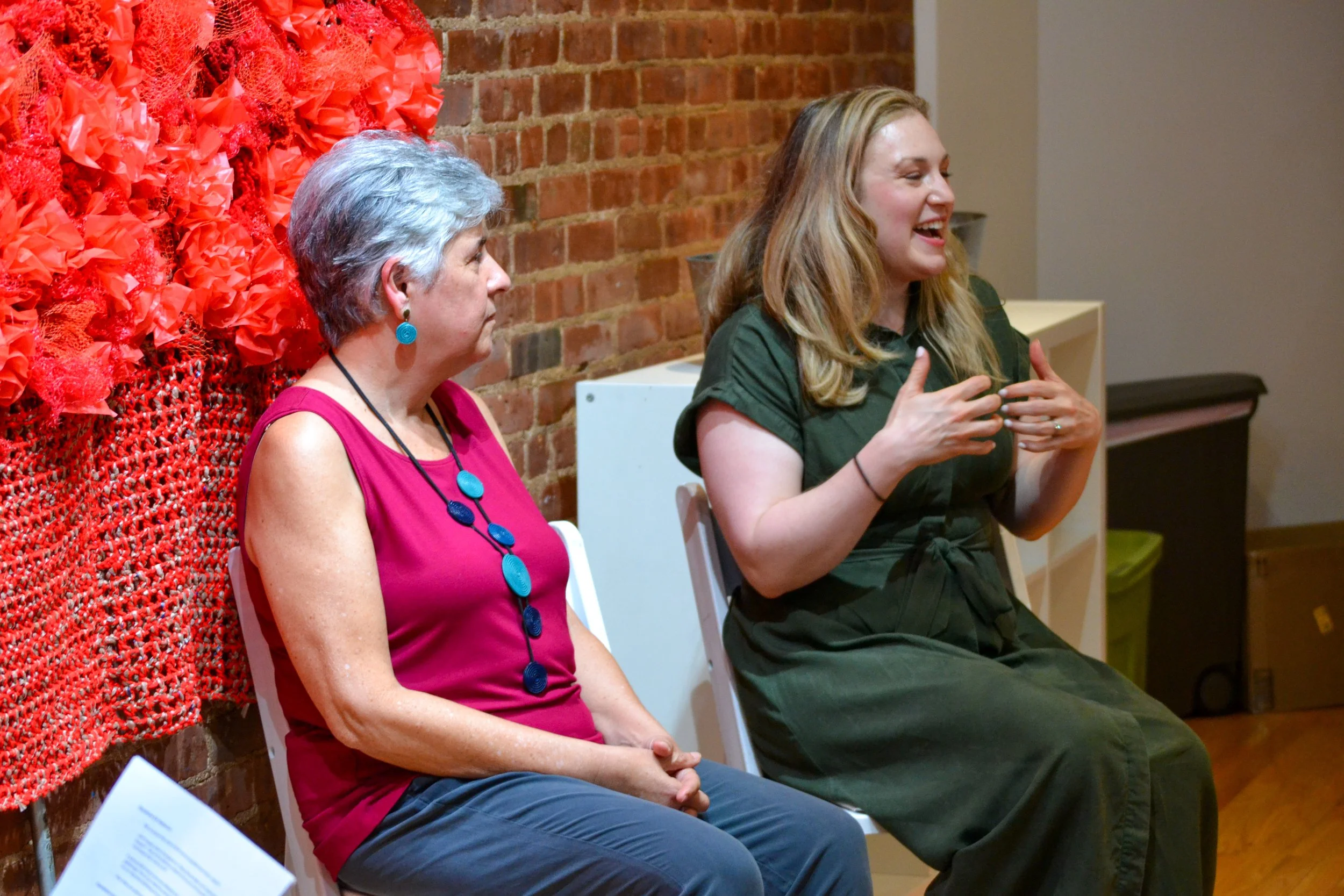
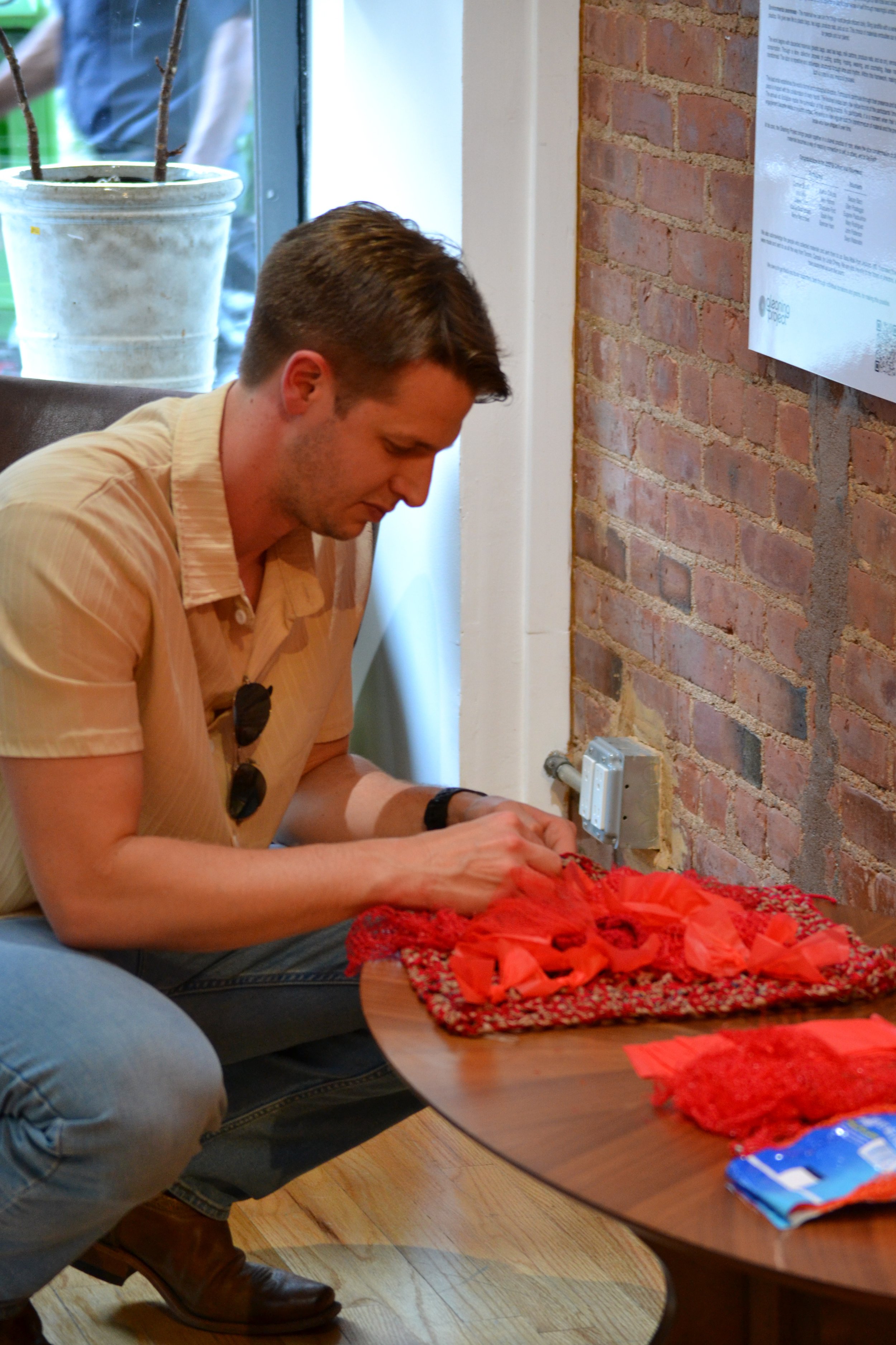
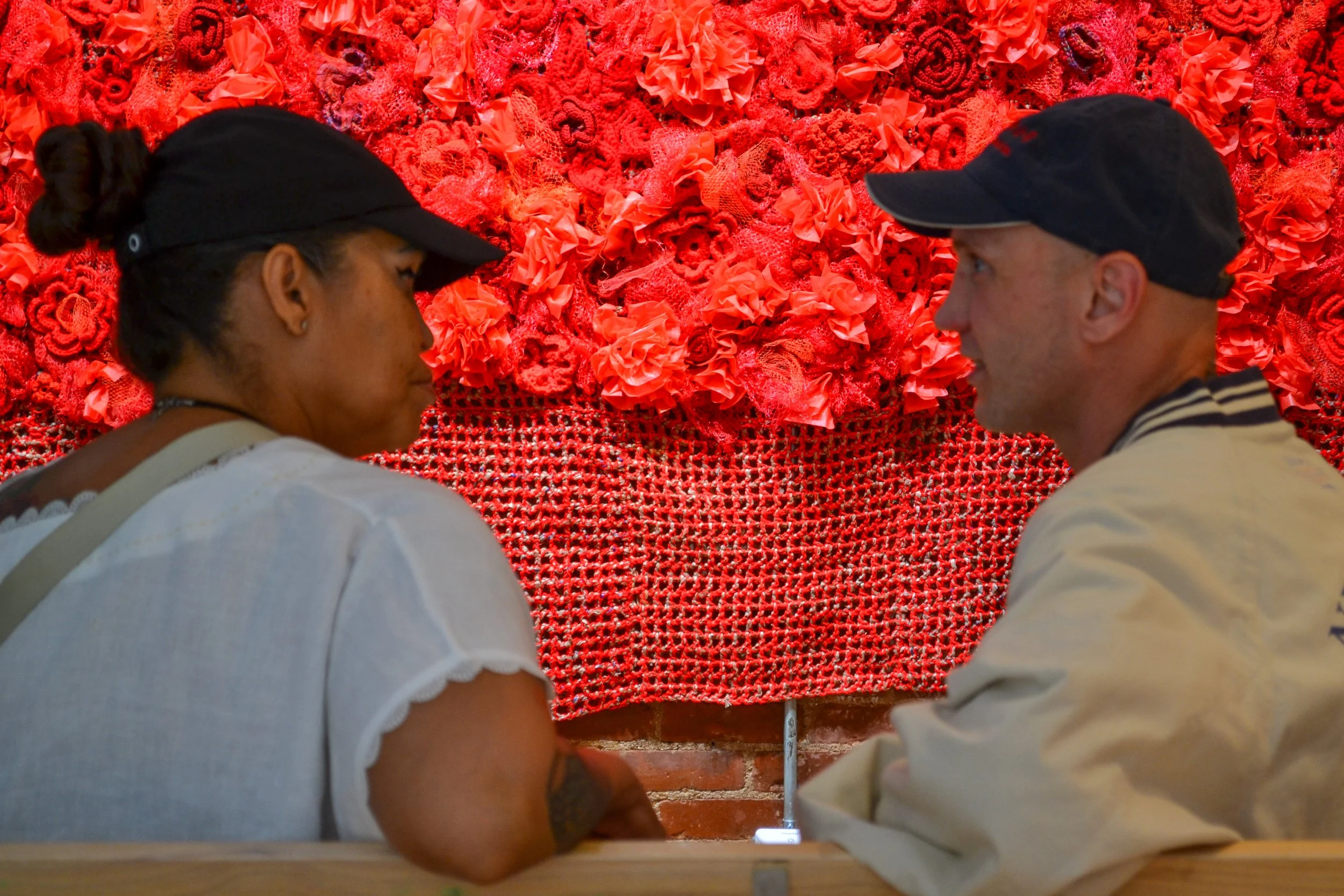
Community Garden sits with that same tension. A sprawling hand-crocheted net forms the ground upon which vibrant red flowers are “planted,” all made by a different set of hands. Contributors span neighborhoods, states, and borders, transforming individual efforts into a shared landscape. The materials carry their own histories: red yarn reclaimed from an abandoned project, plastic bags collected and shipped across state lines, and plastic nets once discarded now stitched into something enduring. The piece reflects what we are building at Gleaning Project: a space where work is not only about earning but also about making something meaningful together, where both bread and roses coexist.
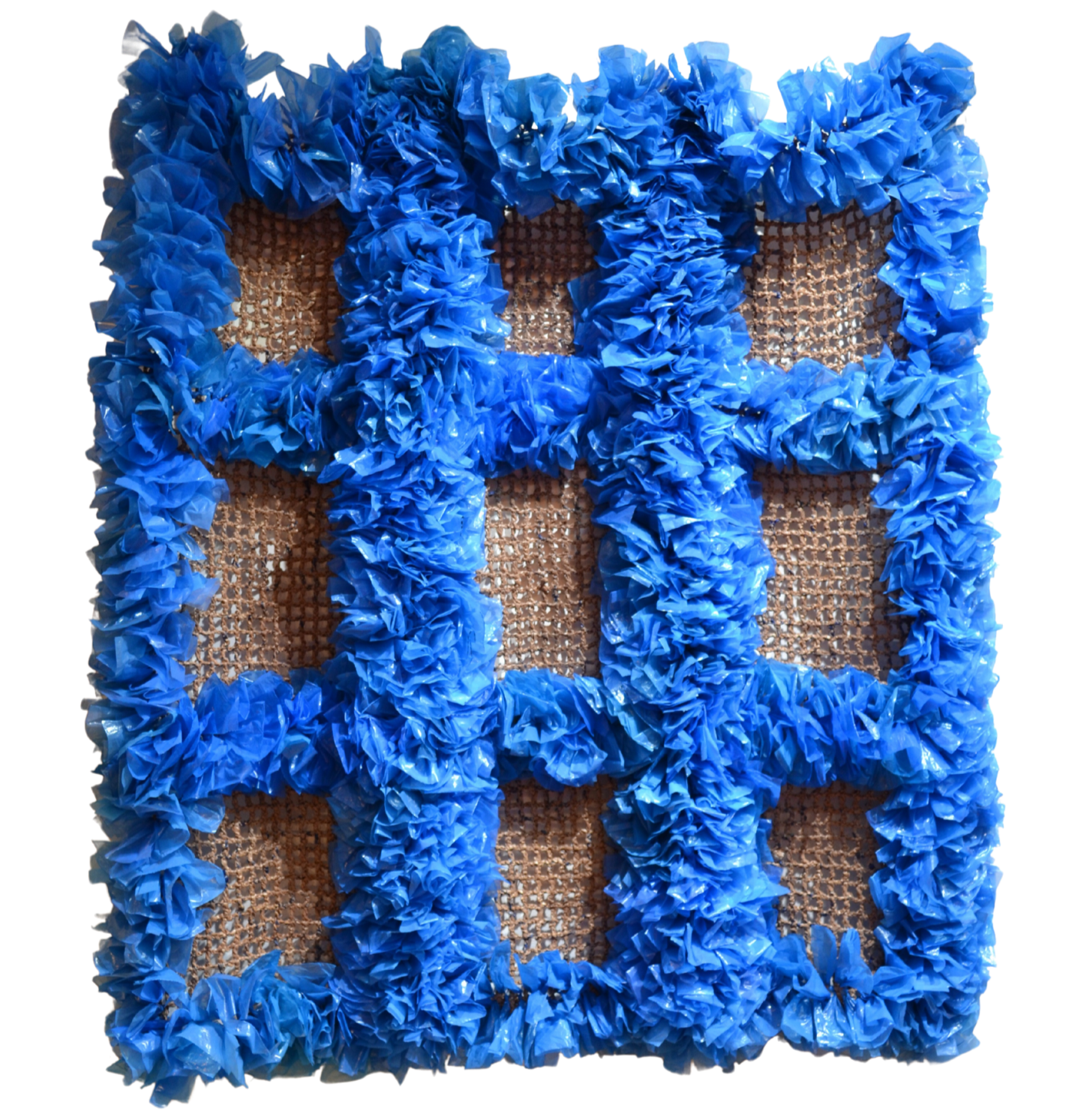
Weaving Through the Blues
2026
Plastic bags
42 x 42 in
Weaving Through the Blues references systems that entangle and constrain.
Bags sent from Jackson, Mississippi, where plastic is still widely used, meet the blue sleeves of New York Times deliveries collected here. These fragments are cut, tied, and woven into a brown crocheted base that evokes natural fibers, while the soft blue gathers along the edges like a quiet weight. The piece holds a sense of longing. It is not celebratory; it sits closer to lament. It grieves social injustices, arms and wars, misuse of resources, and disregard for the fragile world we collectively share.
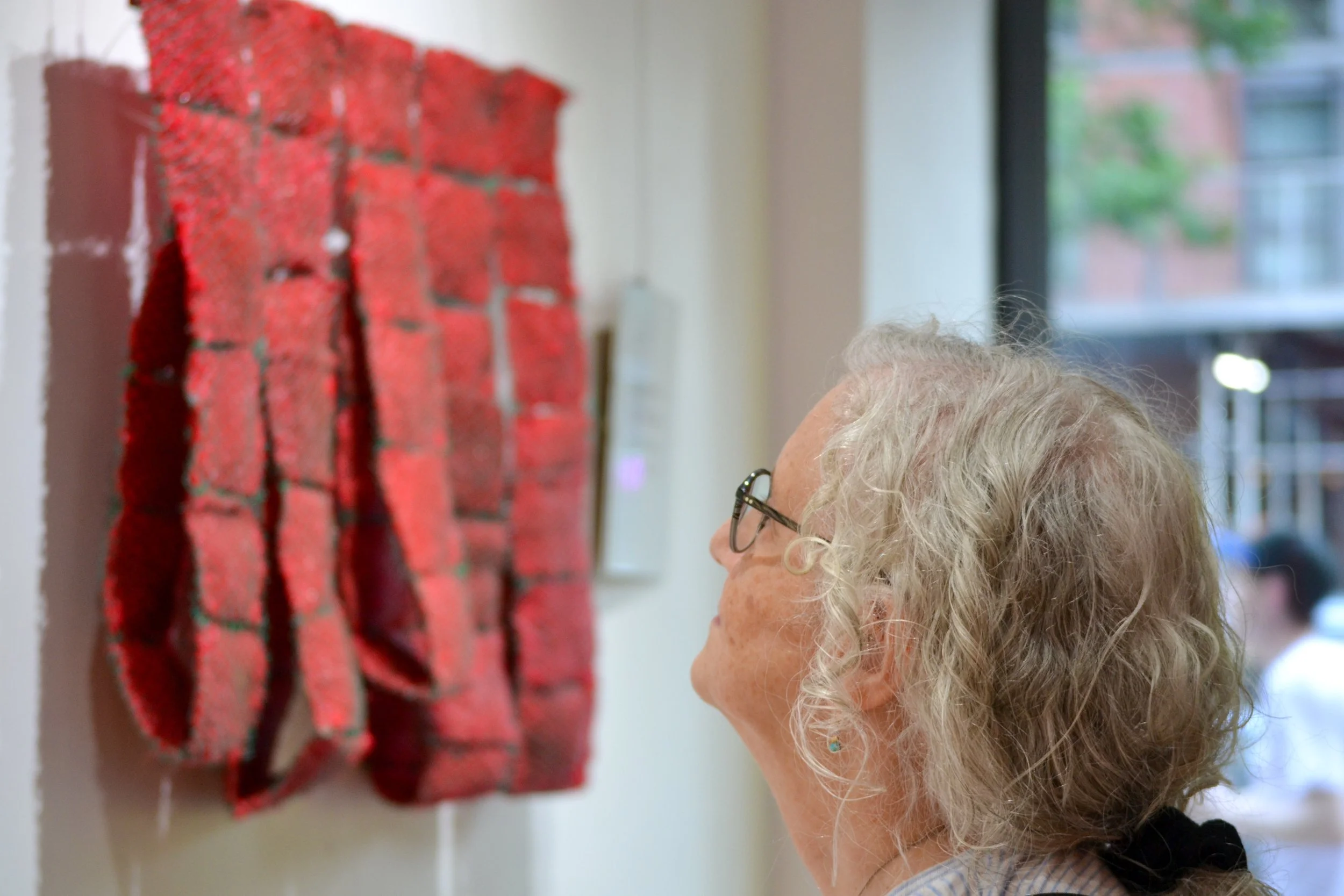
This Untitled piece begins with the small plastic nets that wrap our food, fruit, bottles, and everyday goods. These materials are produced by a global plastic industry that now generates over 400 million tons of plastic each year, much of it for single-use packaging. These green nets, collected and sewn into long vertical strips, are filled with red nets from other packaging, plastic inside plastic. The form loops back onto itself, pointing directly to a system built on greed and excess. Most of this plastic will not be recycled; it will persist for hundreds of years, accumulating in landfills, waterways, and our bodies. Like the piece, we live surrounded by layers of it, an endless cycle that is not accidental but designed.
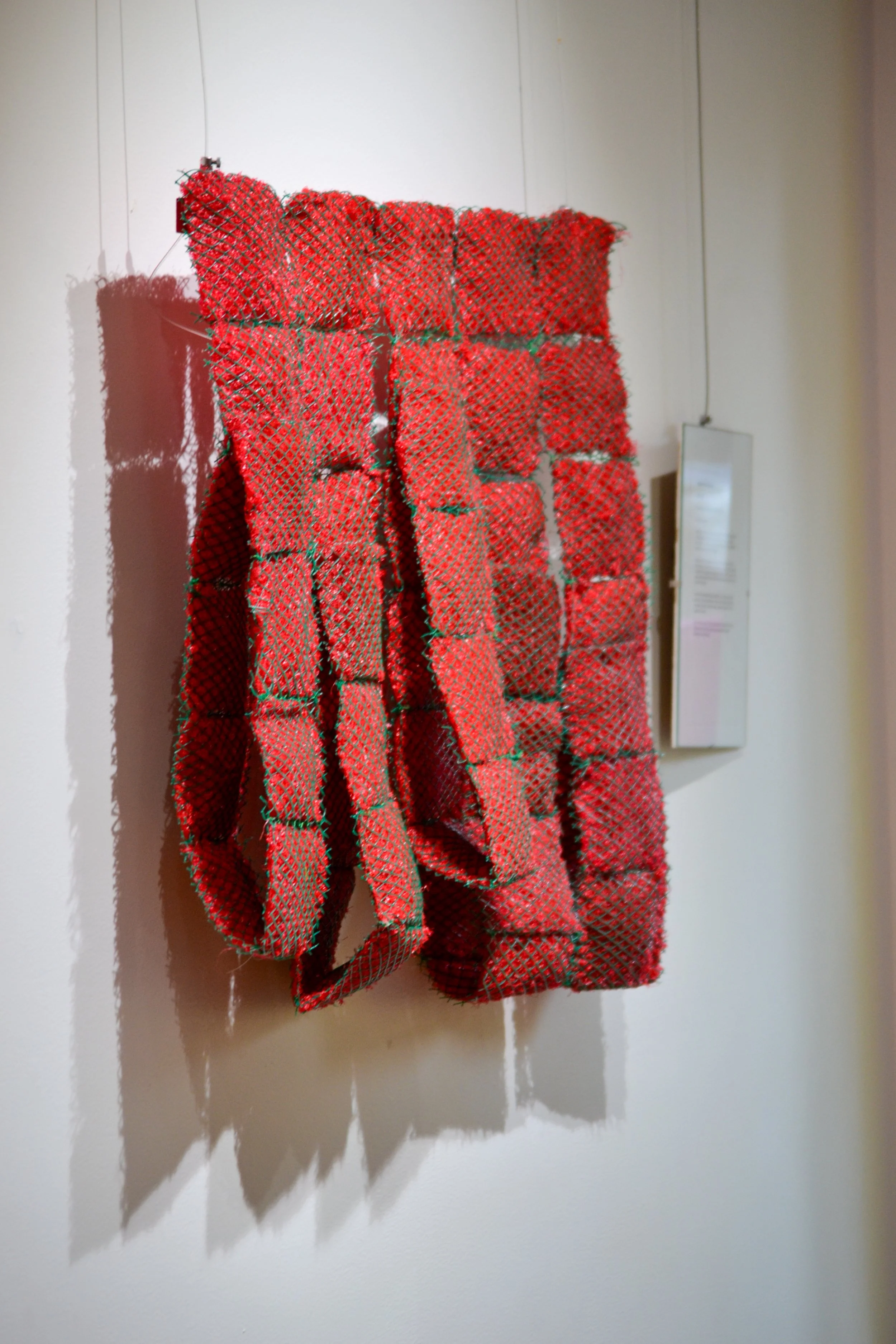
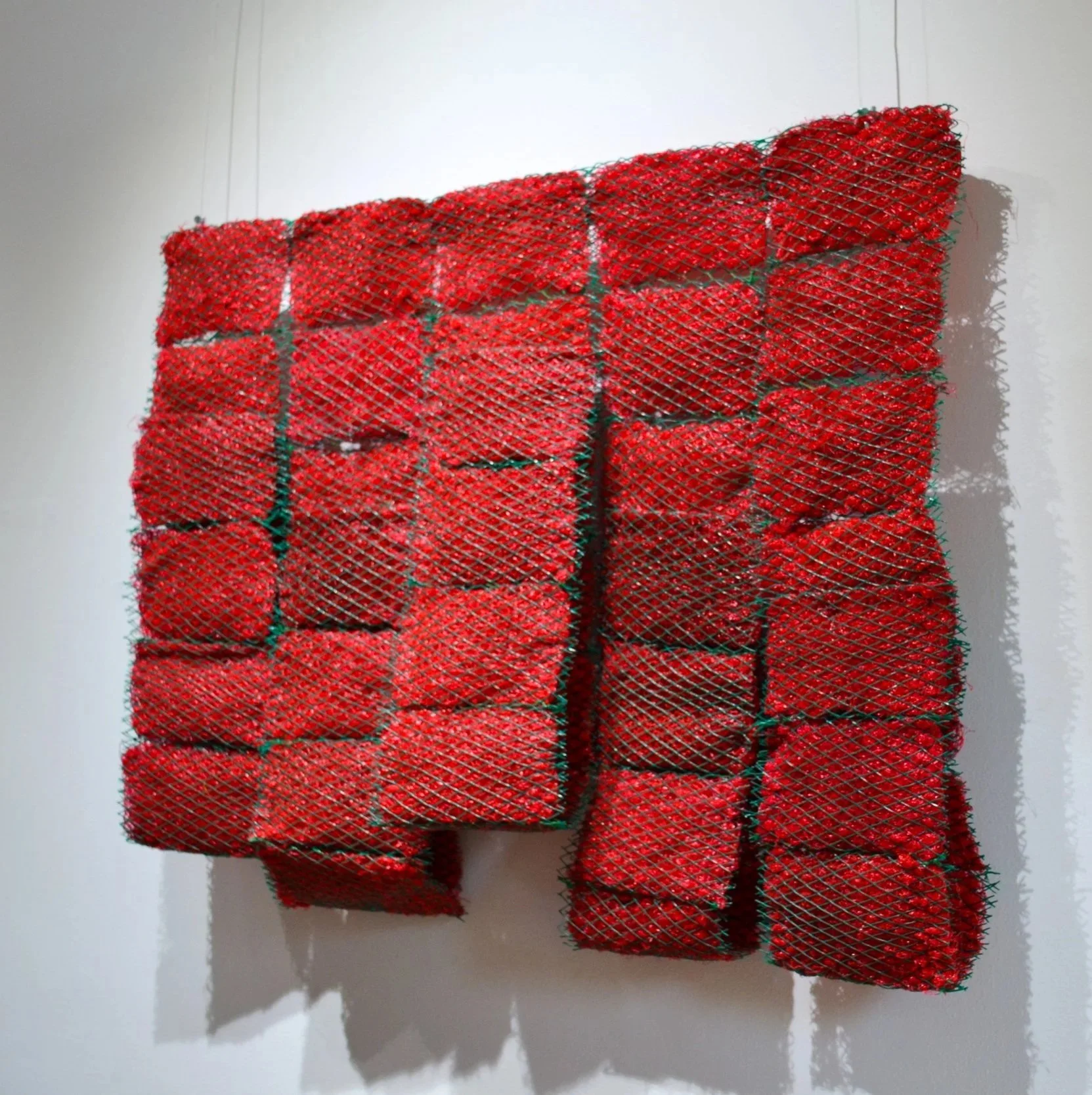
Untitled
2026
Nylon net packaging, thread
35 x 25 in
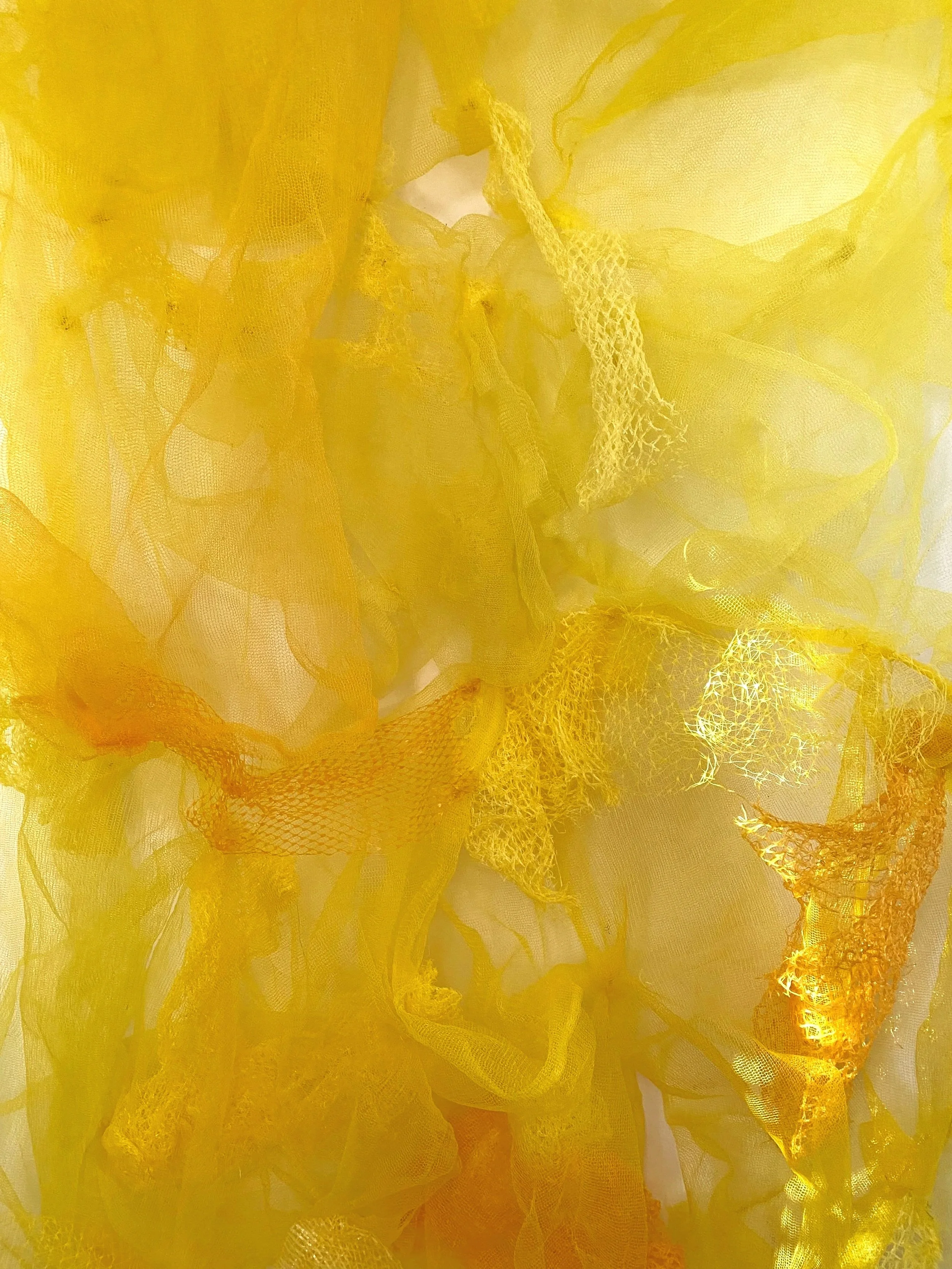
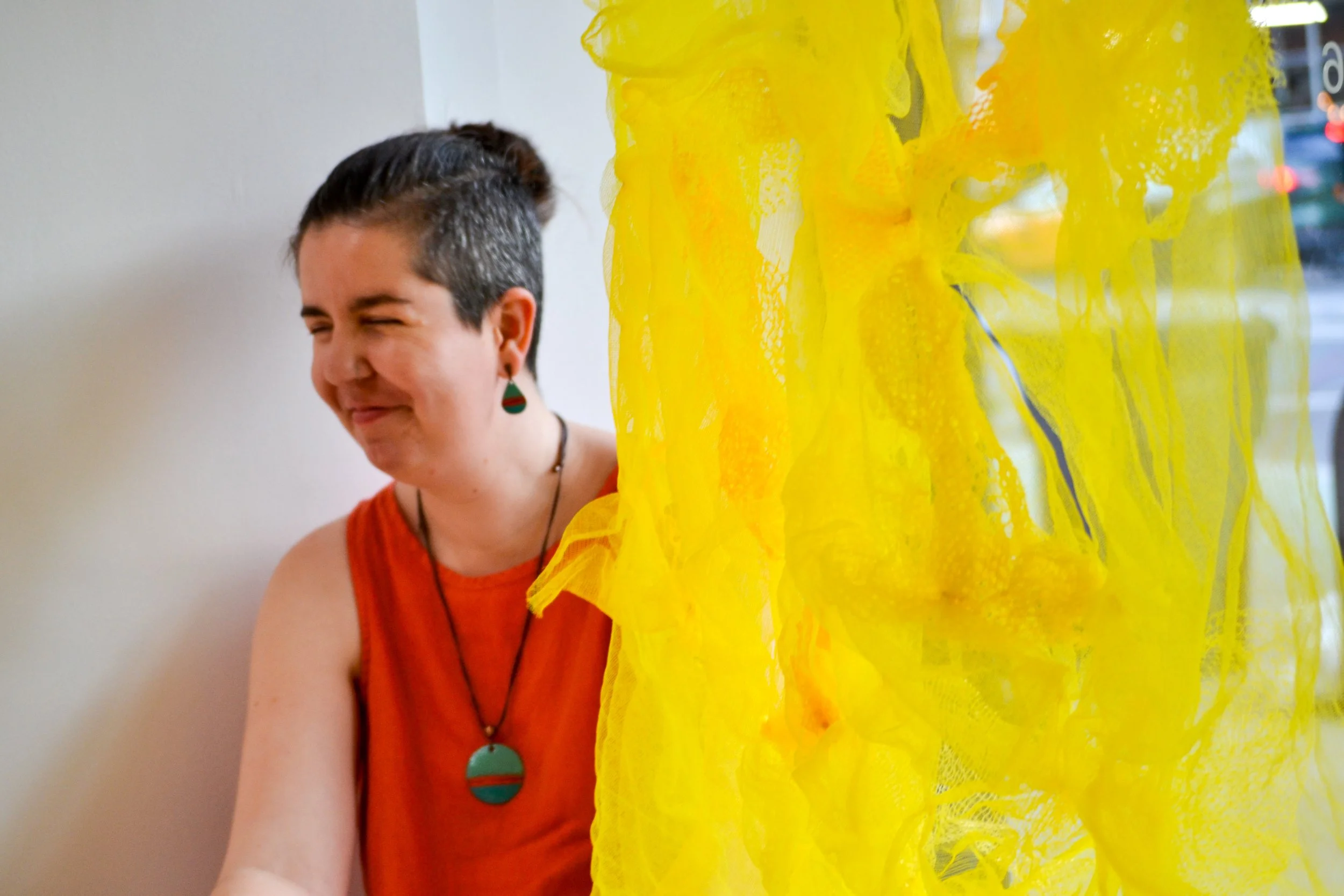
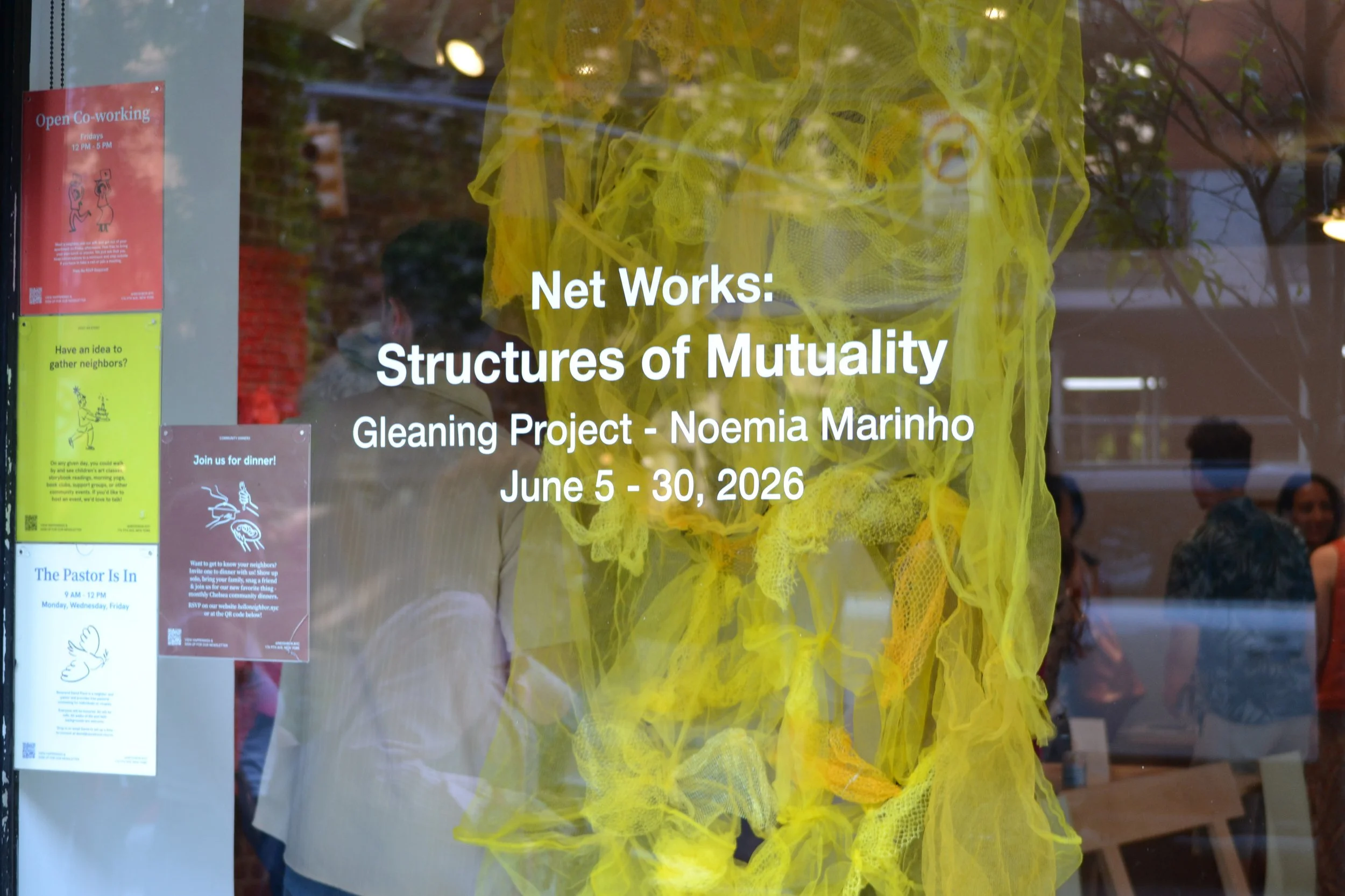
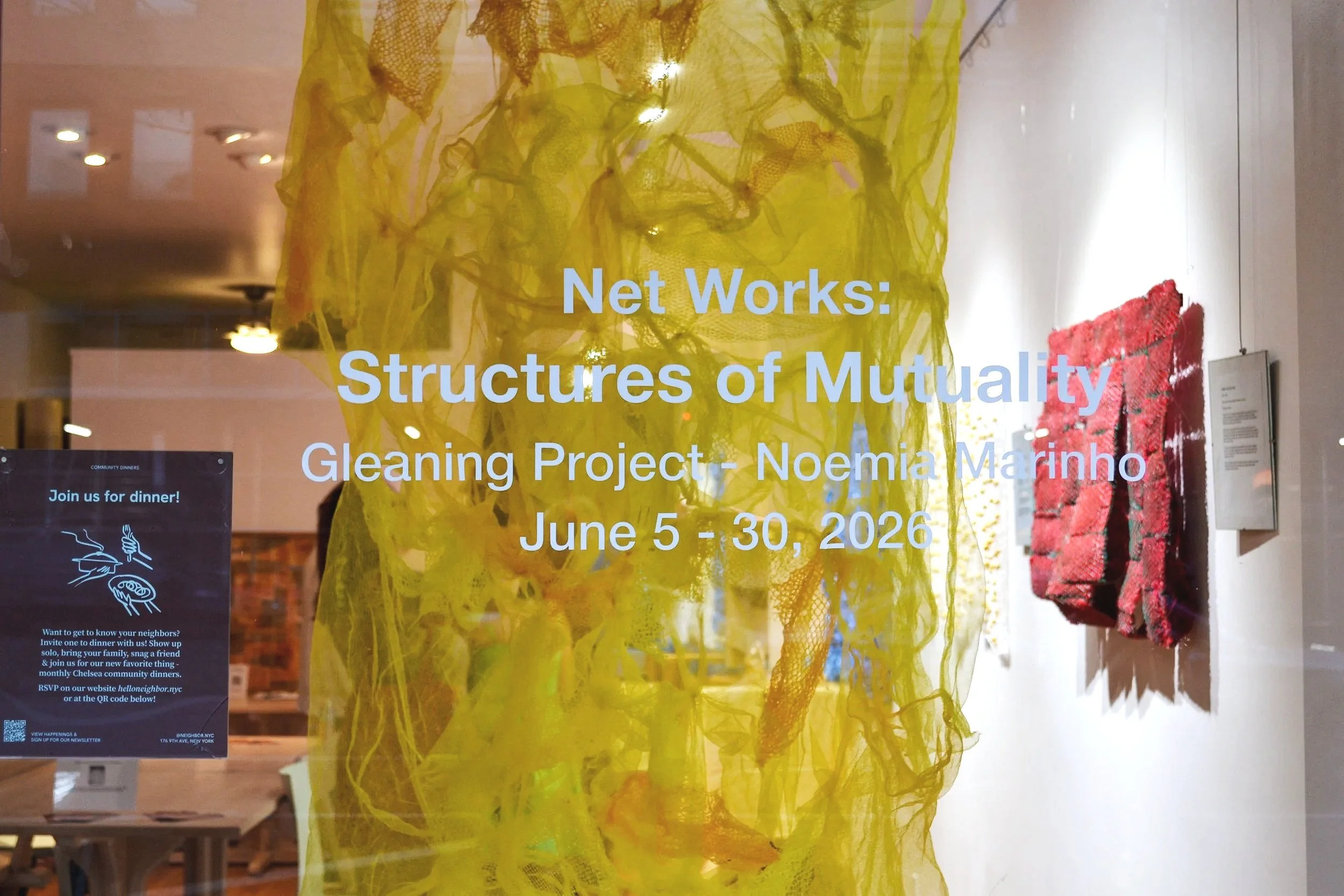
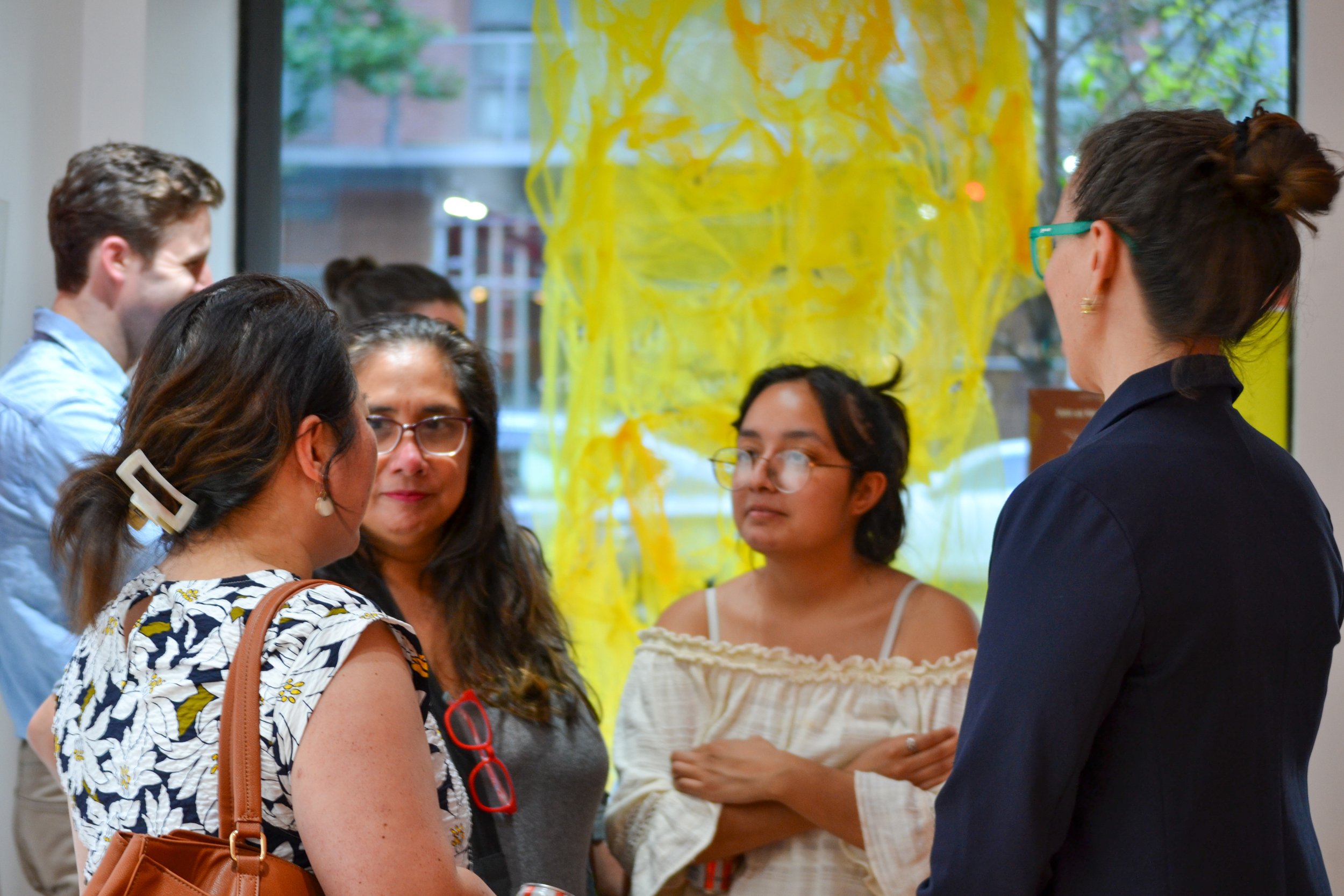
Queen of Hope, the window piece, closes the exhibition with a quiet offering. It began with bright yellow plastic nets, once used to hold tulip bulbs, that a friend saved and passed on. The color carries light. It carries memory. As I worked, I thought of a past participant who had used this same material, a survivor of sex trafficking.
This piece is in her honor, and in honor of all the women who come through the Gleaning Project, many of them carrying stories we may never fully see. The form gathers into something soft, like a cloud of light that penetrates your soul. It is a reminder that hope does not arrive all at once; it is made slowly, through care, through work, through community. Like a net, it expands beyond the individual, holding not only each other but also the fragile world we share.
At its core, Net Works: Structures of Mutuality is an invitation
to slow down, to notice how things and people are held together, and to imagine community as something we actively weave, strand by strand. By transforming discarded materials through communal making, Net Works asks what kinds of networks we want to build, and how art can help us build them.